Episode 1
Zubairu Dagona on Trauma, Healing, and Science in Africa
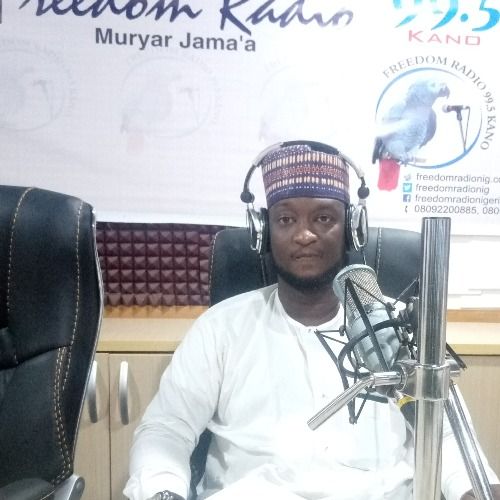
In this first episode of the brand new season, we are introduced to Dr. Zubairu Dagona, a professor at the University of Jos who specialises in Clinical Psychology at the University of Jos. In this conversation, he shares how engagement with qualitative methods has shaped his understanding of trauma and healing within the Nigerian context. Dr. Dagona also articulates a compelling argument against the reliance on Western instruments, suggesting that such practices can perpetuate neocolonial attitudes in research. Besides that, he critiques the prevalent academic culture that dismisses qualitative research as inferior, advocating for a comprehensive approach that includes both qualitative and quantitative methodologies.
Transcript
David Ehrhardt
::Welcome to Africa Knows. We're back! A few years later than planned, but we're very excited to be able to share a new season of interviews with scholars and intellectuals from all over Africa, from Nigeria, from Kenya, from Ghana and elsewhere. Today we are starting back in Nigeria, where Henry Mang talks to Dr. Zubairu Dagona, a professor associated with the University of Jos.
He specializes in clinical psychology and was the director of the center for Conflict Resolution and Peace Studies at the University of Jos. Dr. Dagona is a long term practitioner with experience in dealing with extensive psychological trauma.
And in this episode he tells us about how NGO reports do not constitute science, the importance of diverse methods in psychology and how these methods have helped him to understand some of the powerful community based forms of dealing with psychological trauma. So without further ado, here is Dr. Dagona.
Zubairu Dagona
::I've taught through various levels of academic researchers in the university here in Nigeria, the University of Jos, where I'm located. We are endowed, expected to do three things. First is research, then community service, then of course teaching, or that's what we call lecturing.
And in the clinical perspective we go off for interventions in the hospitals and in the communities. I started as a complete quantitative psychologist.
Henry Mang
Can you explain that?
Zubairu Dagona
Virtually there are three research methodologies globally: the qualitative, the quantitative and the mixed method, or what they call the qual-quat technique. I started, my background was actually in quantitative, meaning I took the quantitative approach up to the statistical approach.
I would go out with data, with western instruments, chiefly Western instruments, and I would go to the fields, sometimes with standardization, sometimes without standardization.
But most of the time we do go out, or we would go out and standardize the instruments and then localize them in our communities and then get the data particularly of clinical research. The clinical researchers are two basic researches that we build on the theories and then the intervention researches.
And that's what you call the intervention research. That's what we normally do. So I was holding on to the orientation of research or that method of research: Quantitative.
Yeah, for a long time. And all my, I think all my publications, about 40 something of them.
quantitative techniques until:When I got there I was still on the quantitative line until I met another clinical psychologist in the same peace study center who happened to be my supervisor. That was when I was introduced to quantitative technique. That's the second aspect of research. So initially I was thinking of even doing a qual-quant, that's the mixed method. But I now said no, I'm coming from a quantitative background. Let me see what I can do with the qualitative research methodology.
ill tell you that I read over:I can tell you that today I can go into almost all the fields. Archaeology, I can go into. Anthropology, sociology, psychology, social psychology and others.
And to cut it short, my PhD dissertation is there online. It is an analysis of trauma experience among young people in Jos. So it is there online.
It's completely qualitative and the University of Bradford has judged it to be one of the best and that's why they published it online and everybody can access it now.
Henry Mang
::Interestingly, Sorry, yeah, you. You talked about you transiting from. Quantitative to Qualitative research. Yeah.
In your view, and, this is quite a prejudicial question, which of these methodologies, either qualitative or quantitative seems to work best in the African setting?
Or do you think that they should be measured by their value? Or do you think that basically it's easier to just…
Because for instance now some look at quantitative studies as mainly an instrument to get general data which is usually applauded for in the West.
Zubairu Dagona
::I think this is the departure, because I will tell you that the quantitative technique chiefly we are just another neocolonization. Neoconalization in the sense that. All the instruments used are from the West.
Henry Mang
::Yes.
Zubairu Dagona
::And so when you are doing it, you're just replicating and furthering the Western agenda of research.
Henry Mang
::So don't you think that is too general?
Zubairu Dagona
::Well, this is one of the things that I noticed.
Because I kept on repeating and repeating, replicating their own research and sending the results and other things. So that did not go well with me.
k. That was the Jos Crisis in:And so I wrote to the advisors, as the head of department of Psychology I wanted intervention and he gave me the go ahead to go and intervene especially among the university community that had been dislodged from one of the communities.
So when I went to the University Club. That's where the university community was launched. Yeah. So, yeah,where they were refuged.
So when they had to intervene, when we started asking questions, we were thinking that just like the trajectory of the west, they'll be thinking about trauma. Yeah. They'll be thinking about this and that. Unfortunately, what we found was quite different. Yeah. We found out that, yeah, they.
They were sleeping well, which was a major trauma symptom, lack of sleep. They were sleeping well and they had given up because of their background in religion and spirituality.
They had given everything up because of God. Yeah. So they were relieved. All they cared about was the future, hope. How do I build again, my home? How do I now live again?
This was hopeful, unlike the Western perspective, was depressive. “Oh, I am finished. Oh, I am done.” This was the expectation. This was my push to the UK pursuing a PhD.
Henry Mang
::That's quite interesting because as it is now.
Zubairu Dagona
::Yeah.
Henry Mang
::I think we're going to deviate a bit and look into, because it's interesting, you're into trauma.
Zubairu Dagona
::Yeah.
Henry Mang
::And I think. Well, with the little I've known about your work, most of your work looks at trauma experience and how people cope.
Zubairu Dagona
::Yeah.
Henry Mang
::So, yes, the interesting thing now you have brought up this issue with the 2001 incident and how people. The perspectives. Yeah. And most of these perspectives were quantitative because in many cases.
Surveys were conducted and people were asked guided questions.
Zubairu Dagona
::Okay.
Henry Mang
::And so these guided questions only elicited the responses that were guided are not necessarily…
Zubairu Dagona
::This was the instrument brought from the West.
Henry Mang
::Okay.
Zubairu Dagona
::So when I now went and I found out about that, one thing that I started asking myself was that this is individualistic and individualism is Western. We are from a collective environment, pluralist environment.
So we are definitely going to have a problem if we begin to just use the same method, it's going to be a problem. And this is up to date, up to this morning. I spoke with Professor Samuegu that you know very well. So anyway, let's keep it aside.
So my deviation is from the individual approach of that Western theoretical approach to research of quantitative gathering individuals giving them blah, blah, blah, inventories and schedules, and then they fill and then they give you back.
This was a problem because it was not giving me what I wanted, because most of the items were not localized. And even if they were localized, they were not from our experiences.
So what I decided to do was let me pursue the qualitative and as I've told you, I really suffered. I wouldn't say I will suffer.
But I tried my best to build myself in qualitative approach and to God, when I now build myself to qualitative approach and now shifted and that's where the methodological shift came in.
From the individual perspective of quantitative research into the problem's perspective of qualitative from the individual's perspective now down to the community level. Psychology was focused on the Individual, too Western. Individual, individual Family,...
Now we are, as I've said earlier, a community. Now. So since we are this pluralism, now I now decided to say, okay, let me shift psychology from the quantitative to qualitative from the individual to the community level. And so this is where I belong. Now what do I do? I go completely qualitative.
I go to the people, listen to them, conduct all those things that have been there, talk to the children in group, talk to the females in group. All these focus group discussions and the grounded theories and other things, those still western but they fit more into our own cultures.
Henry Mang
::Because with the focus group common interviews you are able to actually innovate during…
Zubairu Dagona
::The conversation! Seriously! To the localized issues. And this is what we get the best out of that. So I can tell you that, without mixing words, I like more quality quantitative work than quantitative. 2: The quantitative works were all hinged on the western theories.
They build their theories and they think it will also affect us here, applies to us here. Now I decided okay, if that's the case, since this induction versus deduction, why can't we start building our own theories?
And only qualitative can give you that. Now if I can tell you if there are shortfalls of research methodologies in Africa, this is where it is.
Our people now in the social sciences and humanities, they do the so-called qualitative researches. But do they do the qualitative researches to the end to turn out theories? No. So this is the shortfall. This is now the shortfall.
Henry Mang
::So what you're saying, yeah, in a sense is that basically our work as qualitative researchers in Africa is more of a reporting and not necessarily about critical thinking?
Zubairu Dagona
::I mean, I mentioned this even yesterday in the night and even this morning. Most of the works in Africa here are reports. They are not critical thinking, they're not academic.
I want to tell you that, and go and look at the PhDs today. All of them were relying on the data from the global data of the UN which has not been exposed to the rigors of academic researchers WHO, UNDP, Unicef, da da da da da. All these are the ones that are academics today are now hinging their literature based on that.
So you can see that we are now turning in reports in terms of our PhDs, we are turning reports in terms of our so-called research papers. They are not subjected to the academic rigors. So this is where the shortfall is if there is one, it is this one in Africa.
So what do I want to be seeing?
I want to see Africans building theories locally and then exporting that to the quantitative people so that the quantitative people can now look at it and then they now also replicate what we are doing here. So this is what I'm saying.
Henry Mang
::Just to cut you in, but don't you think that is the challenge we have?
I once had an experience where I was to write a report and it was actually, it was supposed to be a mixed methodology report, but I came to observe that when I wrote the preliminary. Well, not a report, basically we did some fieldwork, we had submitted a preliminary document. The response was that it was either too academic and was just. Too complicated and that was to an international NGO. So the idea was they were. They felt we should give them numbers.
Zubairu Dagona
::Yeah.
Henry Mang
::Rather than giving them details in which they think they know already. Yeah. Do you think that that is where the conflict comes from? Because if you want to sell our theories…
Zubairu Dagona
::Yeah.
Henry Mang
::Or want to give our theories out there, would they accept our theories? Because in their view they already know the “problem of Africa.”
Zubairu Dagona
::Yeah.
Henry Mang
::And so maybe in their view, if we bring theories, in many cases they might not be… They might not have passed through the academic rigors of the West.
Zubairu Dagona
::Well, anyway, I think these are just thoughts that we go through. One thing we need to do is if an academic is working for an NGO, that's consultancy. Yes.
And so when he comes to write, he will write reports and give it to them. They don't need complicated things. They stop at percentages and that is all they need.
Now that is a report that is for you as consultants. But when you come to write academic papers that are going to be really exposed to the Western, I mean global academics, then the trajectory of the research records have to be followed.
Henry Mang
::Will they still accept our…?
Zubairu Dagona
::They do accept. I told you about my work being accepted and published by the University of Bradford. It was chiefly here and I built my theory based on it.
And if you look at it, it has little of the Western ways of coping with trauma, especially through children. Because the children in Africa, they don't need some of those things that they need outside there.
They don't need toys because they have the physical human being, so they don't need toys.
So all we need is the presence of the parents and the presence of the parents was there, or a parental figure, which the larger community is there for the African children. So these are my theories. This is a theory I developed out of my listeners and it has been accepted in the west now too.
When I came back, my supervisor called me and told me, do you have time to discuss with someone from Eastern Europe who also came to do something on trauma? He's a traumatologist. So we compared and the guy had to follow my own instruments,.. not even instruments, my own methodology, procedure.
So he followed my own procedures. So this procedure has been taken over by someone from the west and this is theoretical and that's it. So I think this idea of saying they will not. I think it's defeatist because I think global academia is one, it's solid.
So wherever you come from, you just expose your work to rigors and then your procedure to the rigors of research and to be accepted. African academics have been accepted globally. They are published in all the global… Sage and other things. So I think if an African just wakes up and says that it's not going to be accepted, I think it's defeatist.
Henry Mang
::Yeah, but in your view. As an academic here in Nigeria and also with the experience from the west and how maybe your supervisor was able to accommodate your desire to change from one methodology…
Zubairu Dagona
::Yeah. One methodology to another methodology. Yeah.
Henry Mang
::Is that common within the Nigerian academic circle? Do we really get the opportunity to actually transit as easily? Because in many cases. Scholarship here seems to restrict itself.
I'll give you an example.
I have experienced a case where in dealing with most, especially postgraduate master students, the expectation in some departments will require that you must do a mixed methodology or provide more of quantitative data. And just as you pointed out, you had started as a quantitative person. Could it be that, maybe, I am not sure and I'm just picking your brain here, maybe there's too much restriction in trying to use one instrument in favor rather than the other?
Zubairu Dagona
::I must tell you that this is another shortfall and I will agree with you because I found it very difficult when I came back and I came back with a qualitative technology and methodology here, my own department of psychology, which is rooted in quantitative research. Now I decided to introduce the Qualitative. Qualitative psychology.
And I gave a talk, the first time departmental talk after almost 25 years of absence.
And when I gave a talk to students and staff, one particular professor got up and told me that the qualitative research is trash and I should go back and do another research. I was so happy that students now wooed him. Because they were following what I was saying.
Henry Mang
::Yes.
Zubairu Dagona
::And the staff also joined in wooing that person. So we have this aspect of when you are just hinged onto one theory, you continue with that theory without giving room for growth.
And this is what we have here. Most of us are into quantitative and they don't want to change that perspective.
But most of the theories are old, even the western theories, you see, that they are quoting old theories. Even in psychology itself it’s the same thing. They are building on a theory that has been published for a long time. The 60s, the 70s and 80s. When we look in the millennium. So what I'm saying here is that there's this challenge.
Academics in Nigeria, Jos, where I am, they don't want to shift their base from one research methodology to another methodology. Even in that research methodology, they don't want to go deep. And this is how we have the quality of publications. The poor quality. Yeah, this really, really poor quality.
And this is what I said from the title down to the background now statement of the problem, to the research objectives questions, the hypothesis and then boiling down to the significance and then streaming it down to the methodology, exposing the literature and then the methodology of research itself. They are questionable because they are only hinge… if you look at the quotations, you find out that all the literature is old, old, old. So this is from quantitative research. Now for the quality, which means beginning bringing up a new theory. Yeah.
Henry Mang
::Yes.
Zubairu Dagona
::This is where they are not even ready to go into that. And if they do, they now shift base. Instead of following the rigors. They go to reports from NGOs.
Henry Mang
::So you see, this is where the confusion comes in.
Zubairu Dagona
::Yeah.
Henry Mang
::Like I told you earlier, you. In most cases, most especially in Nigeria, most scholars usually do not get financing from either the universities or even scholarships for.
Zubairu Dagona
::Finance, yeah, funding.
Henry Mang
::And in many cases, most of the research is endowed by these NGOs who demand…
Zubairu Dagona
::Yeah. Short, brief, brief reports.
Henry Mang
::Numbers reports.
Zubairu Dagona
::Yes.
Henry Mang
::And these short, brief numbers reports are usually the data that is available out there.
Zubairu Dagona
::Yeah.
Henry Mang
::So the rigorous research. Something like you did. In fact, it's quite interesting that you pointed out that.
Henry Mang
::You worked on trauma.
Zubairu Dagona
::Yeah.
Henry Mang
::And even today, the Nigerian government is not necessarily interested in it. In dealing with the issues of research in trauma, even with the conflicts and everything that is taking place. So it's, it's even problematic that you do the work.
Zubairu Dagona
::Yeah.
Henry Mang
::And most of the information that goes out there is the short reports come from NGOs and international agencies.
Zubairu Dagona
::Yeah.
Henry Mang
::That have done maybe just on the spot assessment…
Zubairu Dagona
::Of the problem, surface problems,...
Henry Mang
::Because this is the data, when you go either on the Internet or you go to libraries, you find most of the research that is done and it is seen as the definitive work.
Zubairu Dagona
::Yeah.
Henry Mang
::And not necessarily…
Zubairu Dagona
::Yeah. So what I would normally say is that if you see any reports that is coming from the NGO, and if you're an academic: shy away from that, go into the deep literature and search the academic works and you get the academy and you get the procedures and you get the literature out there, then you can build on that and open up a vacuum and then you go in for research. Unfortunately, we are confused: One hand, they are giving you funding: “Come and do this specific research.” These are the ngos.
On the other hand, we want to promote you. That's another problem. Locally, nationally and globally, in academics, bring in your research publications. If you take the NGO’s and bring academics, definitely you will fail. Because there are two different perspectives. Yeah.
Henry Mang
::Yes. Two extremes
Zubairu Dagona
::Now I will take you on a journey. When I came back, I had a problem.
Henry Mang
::Okay.
Zubairu Dagona
::Because I wanted to blend the Western perspective of trauma research and then bring out our own localized, localized one. So to blend them. And this was what I started doing.
And one person, the UN head in Nigeria, pointed out that she was amazed when she came to one of the hotels to assess what we're doing because they funded us. And she found out that I blended the west and then African perspectives very well.
I said, yeah, I have to do that because trauma is a global thing. Yes. But it is also localized.
If you don't get the meaning of that in a particular culture and you take the meaning of the west, it will not fit in very well. So I get everything from the west, but I get the meaning from the African perspective. So I define exactly what it is, is, and how to go about it.
And this is the perspective of research that I want Africans to go into, or rather I want academics to go into. In Africa. Look at the problem from the perspectives of the communities.
When you do that and you blend the Western and then the local, you fit into the global perspective, the global future.
Henry Mang
::But it still brings us back to the fact that. Yeah, just as you have pointed out, it had to take the UN or the international organization's person to notice this.
Sometimes when you want to argue it, even just as you have pointed out, even within the faculty, there's lots of pushback.
Zubairu Dagona
::Yeah, pushback, true.
Henry Mang
::There's a lot of pushback. And this is even worse when you come to us younger academics. Because with younger academics you're seen as being pushier and trying to be difficult, insert some standards.
Zubairu Dagona
::Actually, we were called the Western babies, we went and got a PhD. I will now want to exert those perspectives to localize.
And they are not ready to change. And that's why we have problems, to be honest with you. We need to fit into the international community.
Henry Mang
::Lastly Sir. Is there any way in which you think this can be changed, even in a little way?
Henry Mang
::This perspective.
Zubairu Dagona
::I'm thinking of if there's anything like global academia. Yes. Then I think there should be orientation education and education of academics. NUC started something like that.
Henry Mang
::Nigerian university.
Zubairu Dagona
::Yes. The Commission started something like that 25 years ago.
Henry Mang
::Okay.
Zubairu Dagona
::But I think they've stopped, where they are coming with methodologies of research. Then they discuss with the particular campuses all over the country. They got funding, I think from the British or the US. It was both Britain and the US.
And then at the end of the day, I think the funding got exhausted and I think they stopped that.
But if they can go ahead with that or other agencies can go ahead with that, especially local, I mean, identifying universities and then a cadre of universities that need investor workers, that need those building up and they can engage them in reorientating them and then also giving them education on the newer perspectives of researchers and especially allowing African professors that are deep into research to take the lead in those workshops. So if we do that with some funding, we can get that. Unfortunately, that's one of the shortfalls again, the Nigerian governments, I would say governments do not come out all through local to international to international. They don't seem to be paying attention to research and research findings. So there's no way a country can build.
Henry Mang
::NGO reports seem to be...
Zubairu Dagona
::Yeah, yeah.
Henry Mang
::More convenient.
Zubairu Dagona
::Yes, yes. Than other academic rigors. That's because they don't do that.
You find quality researchers, even by students, projects resting in the toilet or ending up with them on Akara streets. So these are things…
If the Nigerian government is interested in research through development, through researchers, I think we could have done that…
There's a chunk number of funding so that they can now access these academics and then build on these academics and then move the country forward. All these countries we see are now being sponsored to go somewhere, all of them. They are doing this to develop their own countries.
So this is the thing,...
Henry Mang
::We are able to push it out.
Zubairu Dagona
::Push it, yeah, they will definitely take advantage. Of course. Of course.
Henry Mang
::Thank you very much.
Zubairu Dagona
::You're welcome.
David Ehrhardt
::Thanks for listening and we hope you've enjoyed this conversation. There'll be many more to follow, so stay tuned. You can also go to www.africaknows.eu for much more information.
And if you have any thoughts, comments, ideas on hosts or guests or any other things to share, please get in touch with us. We'd love to hear from you.