Episode 12
Ibrahim Ado Kurawa on Traditional Learning and Modern Education
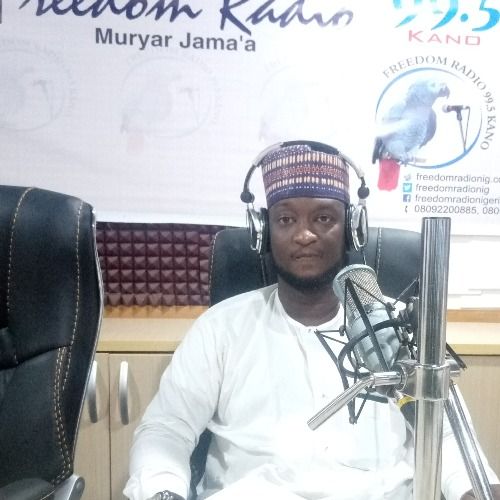
In this episode, Gaddafi is in Kano, Nigeria, speaking to Ibrahim Ado Kurawa, a prominent northern Nigerian writer, historian and Islamic scholar.
Their conversation is about history, knowledge and power in northern Nigeria. And it gives us a glimpse of the rich tradition of scholarship and education in Islamic West Africa, what Kurawa calls the Sudanic tradition, and its interactions with colonialism and more recently, the wider liberalization of knowledge. Kurawa gives us a sense of what the older systems of Islamic learning in Kano were like, in a way, how he experienced them when he was a young man.
He sketches out how they are changing and what may be lost as scholarship moves away from the deeply immersive forms of traditional learning to a faster, more fragmented and more instrumental system of modern education.
But the conversation also turns to why young Nigerians should know their history, how northern Nigeria continues to struggle educationally, why skills training alone cannot solve unemployment, and how the role of traditional leaders in governance has changed under the democratic Nigerian state
Transcript
David Ehrhardt
::Welcome to Africa knows. In this episode, Gaddafi is in Kano, Nigeria, speaking to Ibrahim Ado Kurawa, a prominent northern Nigerian writer, historian and Islamic scholar.
Their conversation is about history, knowledge and power in northern Nigeria. And it gives us a glimpse of the rich tradition of scholarship and education in Islamic West Africa, what Kurawa calls the Sudanic tradition, and its interactions with colonialism and more recently, the wider liberalization of knowledge. Kurawa gives us a sense of what the older systems of Islamic learning in Kano were like, in a way, how he experienced them when he was a young man.
He sketches out how they are changing and what may be lost as scholarship moves away from the deeply immersive forms of traditional learning to a faster, more fragmented and more instrumental system of modern education.
But the conversation also turns to why young Nigerians should know their history, how northern Nigeria continues to struggle educationally, why skills training alone cannot solve unemployment, and how the role of traditional leaders in governance has changed under the democratic Nigerian state. Here is Ibrahim Ado Kurawa.
Gaddafi Abubakar
::Sir, tell us more about your work. Sudanic intellectual tradition.
Ibrahim Ado Kurawa
::The important thing is that the continuation of the knowledge system, how we…we study in this part of Nigeria or this part of Sudan, even from the earliest times up to the time of this time, the kind of books that we read, the kind of how our. How our intellectuals develop and become what they are.
But you know, things are now fast changing and the system is gradually transforming into another thing. Before you have a scholar who teach you everything, you go and learn all the books from him.
We even experience that you are a product of that system too. Some part of his high little. You know, you start from the basic ones, basic fake, basic adept. You know, up to you progress how to Mukhtasar Khalil.
You finish Mukama of Hariri in Adab, you know which is the highest. And then you. You can go into. You do Alfiyyah, even Malik and Nahw, which is grammar.
Gaddafi Abubakar
::Okay.
Ibrahim Ado Kurawa
::Yes. You do rhetoric. And they go to Usul. Yes, Usul al-Fiqh. You start with Al-Waraqat. People study. What do you call it? miftah ul.
Usul, which Sheikh Abdullah married into a poem. He turned it to Alfiyyat al-Usool.
So by the time somebody gets old this at least you have the background to be able to understand the basis of the foundation of knowledge in this part of Sudan. And that was before the establishment of schools in the normal way. From Islamia, you go to this. Where do you call it? Higher Islamic.
You go and make degrees. Some People go to Azhar, some people go to Medina and so on, university. So they have different systems. And now we are seeing a transformation.
Those people who come back from Medina, for example, so they establish their mosque, get the books of Ibn Taymiyyah, read it for people and then read Albani, read what do you call it and say there is no must have and all those kind of things. You understand what is happening.
Gaddafi Abubakar
::Somebody who is maybe the influence of Wahhabi ideology.
Ibrahim Ado Kurawa
::So something like that, because they don't call themselves, I don't want to use that name. So you see, people have changed over time. And some of the books that people read here, they don't read them anymore.
They give fatwa in different using different bases. And a lot of conflicting positions are now emerging because knowledge is liberalized, unlike what it was before.
So somebody can just read a text, you will interpret it the way you want and then you get followers, you put it in the social media and it goes viral and people start arguing and talking.
th century, that was:So now you find it very rare. Even the schools are diminishing that do that. I don't.
When you go to the city, you find few of them now and few scholars from the Zori now emerge as leading scholars.
If not for some of the houses like Merula Sheikh Abdullah in Madago and all those, you can hardly find people that have continued with these things and are prominent, some are doing. But they are not as prominent as the new scholars that have modernized using modern. Yes modern technology to disseminate their knowledge.
So it was not like before. So you can see the difference.
And I was speaking to one of them, he was saying now it's very difficult to do what was happening before because that time somebody who is a scholar, a teacher, he will do six hours in the morning from 10 to maybe one. People with all their different books, they will come and learn. And then after Zur to Asr. So you can imagine the number of hours every day, five days a week.
So it wasn't easy even in University, they tell you you have six hours, 30 hours a week. You know, it's not an easy thing. So some of them were doing that.
But now maybe if you, if you are lucky, you find a scholar who will do two hours a week in his mosque, maybe some will do five hours. You can hardly find somebody who will do all the five days. All the five days between Maghreb and Isha is very difficult. So these things are changing.
And what they do now is for him to take one book and teach all the class.
Gaddafi Abubakar
::Exactly.
Ibrahim Ado Kurawa
::Or like before, you come with your own.
Gaddafi Abubakar
::Exactly.
Ibrahim Ado Kurawa
::You come with all your own books on different subjects. They will teach you your own and then the next person like that.
So if you are in the school, you hear from one of others and they will hear your own and you start developing.
Gaddafi Abubakar
::Exactly.
Ibrahim Ado Kurawa
::So that was before you reach to that level. So this is. That was one of the advantages. But now maybe if they are going to even teach you Hadith, just take one book and do it maybe.
Like, let's check Ahmed Gomba, he was doing two hours, I think.
Gaddafi Abubakar
::Exactly.
Ibrahim Ado Kurawa
::Yeah. On weekends. So maybe he was doing four hours a week compared with those people who are doing 30 hours.
So you can imagine the difference with the system. And it's not changing. Most of the people that, most of the modern scholars, they.
They do just like Sheikh Bamba was doing, just take one book, finish it, take another one. Everybody comes and listen to that book. Like, what is happening in the Mashriq. I think that's what they are doing from all those.
Egypt, when you go to Saudi Arabia, Syria, this how all the scholars do in the mosque. So it was not like our own, where you, you go as an individual and learn at your own face.
There is what they call the person who goes to school every day and doing al-Kursi.
Gaddafi Abubakar
::Okay.
Ibrahim Ado Kurawa
::You know it? when you go with your books, when you return, you just keep there. You don't even read again. But you go every day. Okay, okay. So you'll be a man, you'll be a malam. If you go every day.
Gaddafi Abubakar
::Okay.
Ibrahim Ado Kurawa
::But somebody who will go today, tomorrow you will not go. Like, he's not going to get anything, even if he's going to revise.
Because this one, every day you are here, maybe you are ahead of one student, another student is ahead of you. Yes. So you get, you get revision and you get. So that is why they call it better than even somebody who will be doing the revision.
But it's not consistent for karateng, Al Kuki is consistent. He goes to school Every day. And then he will drop his books when he comes back.
So you see, this is one of the advantages of that tradition that is no more. Now, I could recall some scholars, some outside Nigeria. That's one that we studied with him in Egypt. Sheikh Jamil Ghazi.
He had a school, but it's not a conventional school to say he has. It is usually after Isha, two hours every day. And they have different teachers come and teach different books.
It's not like the syllabus in azhar or in any school. No, he took some books in Adam. They took mutanabi, I think Usuma or something of mutanabi.
Gaddafi Abubakar
::Is it book on Jewish.
Ibrahim Ado Kurawa
::No, no, no. Adabi. They call it letter bellies or something like that. It's different. Adab, you cannot say is literature.
You cannot say it's poetry. It just gives your culture. Yes, poetry. Many things.
Gaddafi Abubakar
::Exactly.
Ibrahim Ado Kurawa
::You know, so some. And given a lot of stories, you know, like. So that book was there in Usul al-Fiqh. They brought al-Isnawi and something like that.
So every day somebody will come and give lectures on these books. And maybe another time another person would come. So. And it's a school, not. Not the teacher with so many people in the mosque is saying something.
Some people go and record it in Facebook. Quote his statement, go and bring it and bring confusion, you know, as we are doing now in northern Nigeria.
So it's a very, very terrible trend, which I don't know where we are heading to.
Gaddafi Abubakar
::Yeah, let's concern our educational system. How do you assess our educational development, in northern Nigeria presently.
Ibrahim Ado Kurawa
::You see, this issue has been a major contentious issue in the sense that we know how education. Western education came to northern Nigeria. The story is familiar to everyone now since that time, that is, we see, okay, 1903.
Because by:Gaddafi Abubakar
::Exactly.
Ibrahim Ado Kurawa
::And then when the government realized that they need clerks before, those people who were doing the clerical work were mostly the Muslim scholars who were trained in Arabic script. And they would write ajmee and do everything. So but the missionaries advised muglad they should change that and bring the Roman letters.
So if he keeps the Arabic letters, it's just as if he's encouraging Islam. So from that time, this conflict began between western education and our own traditional education.
So finally, since western education is the only route to social mobility, people have to go to it.
Gaddafi Abubakar
::Exactly.
Ibrahim Ado Kurawa
::And they need clerks, they need everyone. Finally, they established a school, I think in 1909, which is an Housa school here in Kano, the first government school.
school in the province up to: maybe you can see, okay. From:One provincial secondary school in Kano, and so on and so forth. It's a long story.
But still northern Nigeria is lagging behind in education compared to the south because there isn't much investment in it by the state. Whichever, whether it is now that we have various state governments or like the northern regional government, government is now closer to the people.
Even the basic education is now a responsibility of the local government. And still it is very poor, very terrible.
You cannot, in fact, nothing is functioning properly in most of the public institutions, education institutions. So you cannot even talk that you have a system that is producing people that of quality, even the mass production.
You can see what is happening in the country. There is nothing. So our education is almost zero. And when you compare with other countries, you can see why we are at this level of development.
Even if you look at the whole country, not even northern Nigeria, look at the whole country, how many people have graduated from the time they started university graduation or they started NYSC up to now. You don't have 10 million people who have been NYSC. You can check the website.
Out of 200 million people, you don't have 10 million graduates in Nigeria. Yet, graduates are unemployed.
Gaddafi Abubakar
::Exactly.
Ibrahim Ado Kurawa
::So you see there is something fundamentally wrong with the economy of Nigeria that it cannot even absorb the people that have graduated. We have produced, I think less than maybe about 35,000 medical doctors. Half of them are outside the country. And you can go to.
There are some local governments in Kano state where there is only one medical doctor serving two local governments. So you can imagine what kind of people are we. We don't have enough manpower yet. Even those that have gone to school are unemployed.
So it's a systemic problem. So some people assume, okay, people should go and learn skills. Okay, if you learn skill and do what in the economy, that it's not, it's not moving.
Gaddafi Abubakar
::Exactly.
Ibrahim Ado Kurawa
::This is a problem.
So there are some people that have been training people with different this kind of skills that when they give them the the tools, they sell them because they can't even do the work. It's not, there is no way, they are not absorbed. So there is something fundamentally deficient in the economy to absorb is the economy.
Because what is Nigeria producing, for example? Very simply, when you take statistics now, Nigeria is, I think our export is less than $70 billion. Our import is also less than that.
So that's a function of your productivity. You produce to sell outside, isn't it? So we will start talking about $$. Okay? You don't have that dollar because you don't produce to sell.
in one of the years, I think:Take Turkey for example, it's over $300 billion. Compare with Nigeria. Take Indonesia, compare with Nigeria.
So these are countries maybe that are almost on the same level with Nigeria in terms of economy and what have you. Even Turkey exports $35 billion worth of motor vehicles. Nigeria's export maybe is about 38 billion petroleum products.
And then you export the crude oil. You import, put it back. So the money that you earn, you have to give again.
So how can economy grow when you don't have technology that will even raise your productivity?
So if there is no way that you will be gainfully employed, mass employment maybe in the productive sector, in the manufacturing, because the manufacturing sector is the one that employs more people in most countries now. Our manufacturing sector is terribly, terribly poor.
So how can you imagine when you consider even the importation, what we import and what we produce, you can see the weakness of the economy. When you compare with these countries that I'm talking about, Turkey, Indonesia, you know, Malaysia, all these are countries that export a lot.
So there's much productivity, circulation of wealth, and then we will get employment. When you have factories, they will produce those things people are talking about. Okay, we can have, because of the development in ict.
Now you can do outsourcing, you can do. It's true. Yes, it's possible.
Even most of the dollar that we get now is from people that are home, remittances from people working outside the country, sending money to their leaders and so on. So but we look at the, the quantum, you know, you are talking of maybe $60 billion coming in. You understand me?
Gaddafi Abubakar
::Yeah.
Ibrahim Ado Kurawa
::And then you compare with say Malaysia with $300 billion. Can you? Yeah, can you imagine then how can you, how can such, how can such an economy?
And when you talk about technology transfer, how the society, our agriculture, look at what it is. What do we produce in agriculture? What do we export? You compare with maybe like Netherlands. This is very popular comparison.
Netherlands, the size is less than Niger State, but it produces. It exports 100 billion worth of agricultural products.
Gaddafi Abubakar
::I think in the second…
Ibrahim Ado Kurawa
::So compare, compare with Nigeria, the exports of Netherlands agriculture export is more than the one of Africa as a whole. Even Ukraine with the war, Ukraine is producing more grains than Africa. So most of the bread we eat in Africa, this from the wheat grown in Ukraine.
Even the war that we are having, people are eating a lot of bread. So how, how can you, how can you have employment? How can you have expanded economy to absorb people? Graduates.
You are talking of graduates where you cannot get their employment. Which kind of people are now going to Vietnam? Okay. For job? If you, if you pass your TOEFL or IELTS, this English test.
Gaddafi Abubakar
::Yes, exactly.
Ibrahim Ado Kurawa
::You get a job for teaching in Vietnam and they will pay $1,000 a month. People are going, People are going. Because you can speak English. They want people to teach their people. They are taking people from Nigeria.
So imagine this kind of situation. You have everything, yet you cannot do anything. They said the power that Nigeria produces is less than that of Hungary.
And Hungary is just maybe 20 million people. Nigeria is… But we produce 10% of the electricity of Hungary. So imagine how can you. In this era. We are now in the era of industrial.
In the industrial era, isn't it? So how can a society that is still is not even industrial, it's not even agrarian? Because when you say it's agrarian, at least we are cheating.
So okay, we say it's agrarian in this era.
Gaddafi Abubakar
::Yes.
Ibrahim Ado Kurawa
::And then you have industries and you want to survive. You have a large population of 200 million.
You cannot feed them where they grow rice for Nigeria that they export to Nigeria, in Vietnam, in Thailand, sorry. Is 60km all the rice they sent to Nigeria, this foreign rice is produced in an area of 60km.
So you can imagine, can't you get 60km in Nigeria and cultivate rice? How many hectares?
Gaddafi Abubakar
::60Km?
Ibrahim Ado Kurawa
::You see? So that's all the rice they bring to Nigeria is produced in that area. Nigeria was importing $1 billion worth of rice.
Now it's because they had to stop it. If it's not stop, it will continue growing.
Gaddafi Abubakar
::Yes, yes.
Ibrahim Ado Kurawa
::So with this kind of economy, how can you progress, absorb people? It means there is something fundamentally different.
Gaddafi Abubakar
::Yeah.
Ibrahim Ado Kurawa
::Or wrong with the society, since it has no, it has not been able to develop an economy that will absorb its young generation. So they have to start doing many things that are bad, banditry. Some will have to go out to other countries, cross the Mediterranean and die.
So this is the situation. It's unfortunate. Education is all about politics. When you talk about education, it's politics.
It's not only knowledge because when you say education, it means something that you are doing for the society. So it's. It's politics. It's different from knowledge in the sense that you can read and develop yourself. And what have you got? This one you are.
You have been trained to be productive. Exactly. So if you have been trained for a purpose, it becomes education. And it's a function of politics.
The situation of the society, how people manage their affairs will determine the kind of education they have. And the kind of education they have will determine how the society is going to be, I think. Am I correct?
Gaddafi Abubakar
::Yeah, exactly. Exactly. What is the way out of this?
Ibrahim Ado Kurawa
::I can't have an answer. You know, it's difficult. Many people have talked about. Yeah, maybe if you have a question.
A lot of people talk about the leadership. Leadership and politics. When we discuss. Maybe we can go on.
Gaddafi Abubakar
::In the last decade we witnessed a lot of up and downs, especially here in Kano with regard to the relationship between the politicians and the traditional leaders. How do you assess this relationship in the last decade?
Ibrahim Ado Kurawa
::So we as students of history, we always have to reflect. Why do things happen the way they happen? Isn't it? I think maybe when we try to interrogate that, we can have some idea.
So to me, you know, when the British came, like most of you have taught us, who are historians, they used the system they met to rule the people, isn't it?
Gaddafi Abubakar
::Yeah.
Ibrahim Ado Kurawa
::They use the traditional rulers in northern Nigeria to rule people in the indirect rule. Yes, which his students said it was not indirect, it was direct. Because they were just telling them to do what they have to get away the British.
So this thing they met a system whose legitimacy is based on the jihad of Shoulam, isn't it? All those people in the elite, that's their legitimacy, their participation in the jihad, the participation of their ancestors, isn't it?
So based on that, they have this legitimacy to rule people. And the British continued with that system that this is what they are doing. And it came up to the time of Nigerian state.
That was in:And 60 years ago, some other people came and took over from them and did what they did.
Gaddafi Abubakar
::Okay, by 160 is referring to the leaders of the Sokoto jihad, by 60 years, referring to the British.
Ibrahim Ado Kurawa
::Yes, they did what they did and they ruled. And now they have handed over to us.
And we too, we are going to do what we think is right. So we expect everybody to cooperate with us. Okay, so you can imagine, isn't it bring about some kind of revolution to the system?
So this, this kind of system existed, transformed. And the basis existed before the coming of the British. When they left, they left it like that.
The politicians came, they wanted to subordinate it to them, to make it subordinate to the state. There's a conflict between Saradona and Muhammad. Yes, it was institutional conflict, as professor Mahmoud Yakubu argued.
Because the NA was trying to be independent of the the regional government. And the emir who was the president of the NA thought he was independent. And the regional government wanted to assert its authority.
So the only way was one had to give way to the other.
As great batch, who was the principal secretary of Salona was telling him that you cannot allow colonel NA to be independent because it's not a separate state from the northern regional government. So they had to use Sir Muhammad as an example that they have the authority. And they removed him. He was forced to abdicate.
So you see, that was the beginning of the power. And all traditional rulers have to be subjected to state authority because they are public servants. If you recall what Remy was saying, okay.
On nta, he said adu is nothing. It's nothing. It's nothing but a public servant.
Gaddafi Abubakar
::Exactly. I saw the interview recently.
Ibrahim Ado Kurawa
::So you can imagine, isn't it? Yes. So they have to be subordinate to state authority. It means they are not independent.
s changed to a republic. With:And if you have a republic, it means you are not a monarchy. It has no place for monarchy. Yeah, but the problem is that since the state is weak, there are so many functions of the state that it's not doing.
Taking care of lives and property. That security it doesn't, since it cannot guarantee security. Many people live in ungoverned spaces, but they have their local rulers.
So that gives some kind of function for the traditional authorities. Because the modern authorities are not with the people. And the state is not functioning well. The councilor is nowhere to be found.
The local government doesn't even exist anymore. In most parts. Yes, in most parts of northern Nigeria, the local government is not functioning.
The state governments have appropriated their functions, take their resources, so they don't do anything. Therefore, at the local level, only the local chiefs. So this gives them relevance. It is just a natural occurrence. It's not a constitutional sin.
Because the constitution recognizes only federal, state and local government, it does not recognize any other authority.
But because the state is weak, these civil organizations or state society institutions like traditional rulers, religious leaders, they exercise influence. So at that level you have some relevance.
But when you the issue of conflict now, like what we have in Kano state where the governor decided to create emirates, my argument is that the governor does not have a right to create emirates because emirate was created by the jihad. How can you come and create something that was created by the jihad? And people depend on the jihad for their legitimacy. Is he dan Fodio?
Gaddafi Abubakar
::No.
Ibrahim Ado Kurawa
::Is he conducting a jihad? So how can he create emirate? But he used the power given to him by the state. There's democratic legitimacy. He has been elected.
So he thinks he can use positive law to create a tradition. Which is wrong in the sense that you cannot do that. Because the constitution recognizes people as citizens. Isn't it? It says Nigerians are citizens.
Gaddafi Abubakar
::Exactly.
Ibrahim Ado Kurawa
::So if you are a citizen, it means you have a right to any public office. As long as the criteria is not based on birth. It's not because you you're a son of somebody, you'll be giving a public office. Is it like that? No.
But the emirate is son of somebody. So how can you. Is that. How can you use the constitution?
Gaddafi Abubakar
::Yes.
Ibrahim Ado Kurawa
::To create the dichotomy among citizens. You are using state instrument to give some families.
Gaddafi Abubakar
::That is the contradiction.
Ibrahim Ado Kurawa
::You cannot use that. Those people that are already in that position have a claim that they did jihad and what have you.
But you now you are taking people that don't have that claim and giving them on what basis? Those people that have this claim, but Touré met them, isn't it? So now it's not Voturi, It's Ganduje who is creative.
Ganduji is a metaphor like Namfodio. So is it allowed to use state instrument to say that this office is preserved for so and so family? Written in the law. The law is there. I have it.
Kano Emirate law. You cannot do that. Let me bring it. Okay, I think no problem, sir. So is There he said family of so and so and so office.
How can you write law like that? Other people in the villages, are they not citizens? The constitution says everybody is equal.
You cannot take public office where they will take public resources and say it's only to a particular family. It means that family is above others. And you don't have that in a republican constitution.
It's a republican constitution and is using it to create all these chiefdoms they are creating there. It's wrong. It's wrong. But people can't go to the court because it will take time to argue for it.
But when you go to the court and say you are a citizen, you have a right. Yeah. Because nowhere to a particular tr unless you are going to make the emirs like Tor Tiv. Okay, what's that to the Tor Tiv ruler that was created. Okay. In.
In colonial Nigeria, they have their criteria male, so, so, so and so. It's not any family. Anybody can contest for Tor Tiv. Unless you do that, you cannot give it to any family by this.
So the people that are holding it, they are holding it because they inherited it. And they cannot use positive law to justify it. So you just leave it as custom and tradition. And custom and traditions. They are not written.
If there is conflict, you go to the court. The court will decide. So that's how Emirates supposed to be.
You cannot enact a law to designate public office under the constitution that gave you legitimacy to to discriminate because it's discrimination as far as republican life is concerned.
Since the the French Republic, the American Republic, when you take that idea, okay, if you go to England, there is a monarchy and England, even their constitution is all written. It's all written, isn't it? They use laws that have existed since 13th century, since the Magna Carta, unless another law changes it.
And they are on the law change, isn't it? So it's the body of laws of England that made their constitution of the United Kingdom of Great Britain and Northern Ireland, we don't have that.
So the only way you can have Emirates is for you to leave them as they were when dan Fodio establish them. If they have problem among themselves, they go to court. The court will use the tradition to judge them.
But when you write means you are using the power of the state to legitimize something that does not belong to the state. It's just like saying, okay, now the state will legislate how you eat your food or how you dress or how you pray. Can it do that?
Gaddafi Abubakar
::No.
Ibrahim Ado Kurawa
::So that's.. You cannot… You can only legislate. Okay. You can only legislate if it comes to saying, okay, if I'm going to eat my food, I'm going to smoke the whole area.
You're going to affect somebody, for example.
Gaddafi Abubakar
::Exactly.
Ibrahim Ado Kurawa
::So unless you are going to. Yes. So this is. This is the ethos of the constitution.
Now, this abuse of traditional institution has continued by people like Ganduji and many other state governors. Especially in states that don't have tradition before the Baturi came, before the colonial, like in the southeast, they can create chiefdoms.
Even what we call them here is a king. They call him his Royal Majesty. Something like to your own small clan. Exactly. You are a king of the clan. You are this, that one.
Okay, they do that one is for entertainment. But you cannot do it here. Something that existed, you keep changing, you keep doing this because of certain factors. This is honestly my opinion.
Gaddafi Abubakar
::So what do you think should be the future role of traditional rulers in the democratic setting?
Ibrahim Ado Kurawa
::I think the future nation. Leave them as they are, as people guided by custom and tradition. And then they will find relevance for themselves. They should be part of the society.
They should not be state functionaries like you have imam, you have pastor. They are existing, but they are existing on their own. They don't rely on the state for legitimacy.
If they rely on state, okay, if somebody creates an emirate now, another person will come and demolish it because they have the same instruments that gave them the power to do it, which is the constitution. So it means they will keep doing, keep doing, keep changing.
But if they leave it as something of the society, because people respect anyone that earns respect by doing things that are useful to the people.
So if they keep doing that, they will be relevant not only for the entertainment value of Dawa of Muscat, in other places that don't have Dawa, which are all controlled by traditional rulers, even for other functions.
Gaddafi Abubakar
::What are your views on the current political landscape in the country and what reforms do you believe are necessary for effective governance?
Ibrahim Ado Kurawa
::Well, since I'm not a political scientist, a public person who has an idea, I think you see one of our major problems in this country is we don't have political parties. Yes, they are just for power, for grabbing power, for election, not for the purpose of the governance.
They don't have ideology. That's what I mean. Somebody, a politician will be in this party today, tomorrow he'll go to another one.
So nobody knows what are the values of APC, for example, or pdp what does PDP want to do for Nigeria? Anybody can check and say, okay, if PDP comes, they are going to do this and this.
Like how Democratic Party in America everyone knows they are liberal. Yeah. They, they will liberalize everything. Yes. Abortion, they will have gun control and what have you. Republicans, they against taxes, tax.
So that one is very clear. When you go to Britain, you know what the Conservative party would do and you know what the Labour Party will do. They are for workers. They are this.
They are this what in Nigeria. Can you tell me what APC stands for or what PDP stands for?
Apart from the person who is the president who is ruling, who wants to continue ruling, isn't it? So if you don't have this, it means you will never have any development in politics. Don't you see?
In China it is because the Communist Party that transformed and everybody knows that before you become something, you have to belong to the Communist Party. And the Communist Party has its own rules which are very clear. They are based on merit.
You have to start from the lowest level to become the prime minister. You have to be tried, you have to be tested, you have to get knowledge, you have to get experience.
Before you come to the prime minister of China, you cannot. You must have worked for 30 years. Is their system not working? Where is Nigeria? Even in Japan the Liberal Party has been.
I think one of the parties has been ruling Japan for God knows when until they had crisis in economy. Some people came and said, okay, we are going to change the economy in so so way.
But now the conglomeration of parties in Nigeria, they are just like bandits who want to take power. So Nigerian political parties, they are just like those in Colombia. You know what's happening in Colombia?
They have two parties and they're always fighting each other in different parts of the country, killing and doing whatever. You know what is happening in Nigeria. So this is the situation.
If we want to change, we really need to have political parties that are very clear ideological. This is what we are going to do. Everybody knows this is what Today somebody will be in pdp next tomorrow he's going to be in apc.
Gaddafi Abubakar
::Exactly.
Ibrahim Ado Kurawa
::Even governors, they change. So WEwitness a lot of them. So you can imagine, then it means we don't even know what we are doing.
So the politics in Nigeria is just about grabbing power. Power for the sake of power. Because nobody is accountable to anyone. So you see, we have a long way to go.
David Ehrhardt
::Thank you for listening to this week's episode of Africa Knows new episodes are on the way. So stay tuned via our instagram page @AfricaknowsPodcast and follow us on Spotify, Apple Podcast or most other platforms.
For any comments, questions or ideas, feel free to reach out. We'd love to hear from you. Until next time.